Get a free quote from a septic contractor
Tell us the county and the job. No email needed.
A marketing service, not a licensed contractor. Septic work is performed by independent local contractors.
Who issues a septic permit in Missouri?
It depends on the county, and that is the single most useful thing to know before you start making calls. The state health department describes the arrangement in its own words: in most counties the local health department issues onsite wastewater construction permits, and in the other counties the authority is another agency, such as a sewer district, building department, or planning and zoning department.
Look up the authority for your county, or start with how the permit works.
Source: Missouri Department of Health and Senior Services, Onsite Wastewater Treatment, read 2026-08-26.
When is a construction permit required?
Before you build a system, and before a major modification or major repair to an existing one. The statute sets out the sequence: notify the city, county or department, complete an application on a form the department provides, pay the fee that body has set, and obtain the construction permit. Replacing a tank or building a new lateral field counts as major work. Routine pumping does not.
Source: Section 701.046, Revised Statutes of Missouri, read 2026-08-26.
Are some Missouri properties excluded from the state rules?
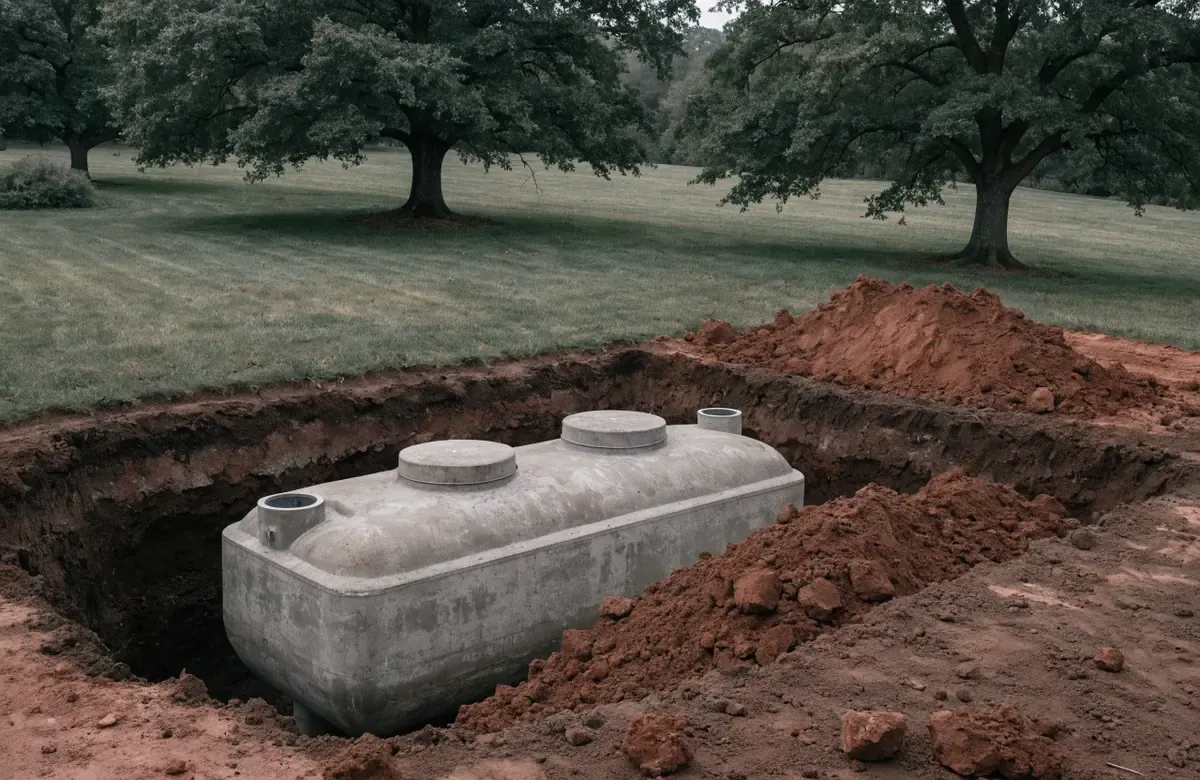
Some are, on conditions, and it is the least understood part of Missouri septic law. A single-family residence lot of three acres or more, and a residential lot of ten acres or more meeting a separation and density test, can fall outside sections 701.025 to 701.059 altogether. But the conditions attached are strict, and the exclusion does not reach lots adjacent to lakes operated by the Corps of Engineers or by a public utility, which takes in much of Missouri's lake country.
A county may also regulate under its own ordinance regardless. The full conditions are on the permit page, and the answer for your property comes from your county rather than from any web page.
Source: Section 701.031, Revised Statutes of Missouri, read 2026-08-26.
What does the state standard require?
Seven things: site selection requirements, minimum design standards for the construction, installation and size of sewage tanks and the length of lateral lines, permit requirements, inspections of installations, repairs to failing systems, an engineering design where the percolation rate exceeds sixty minutes per inch, and criteria for variances.
That engineering trigger matters more in Missouri than it sounds. Slow percolation is ordinary in Ozark ground, and it is the most common reason a straightforward septic project acquires an engineer. The soil evaluation is where that gets decided.
Source: Section 701.043, Revised Statutes of Missouri, read 2026-08-26.
Who is allowed to install a system?
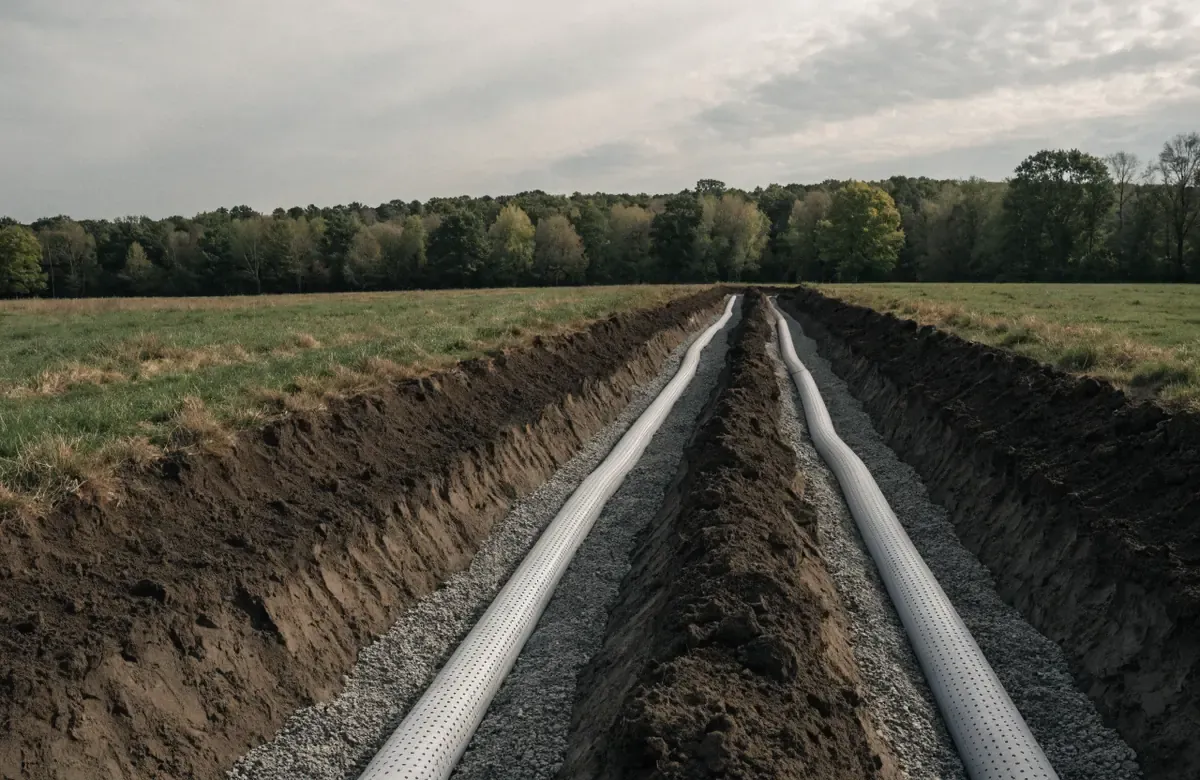
Someone registered with the state. Any person installing onsite sewage disposal systems has to be registered to do so by the Department of Health and Senior Services, at a basic or an advanced level depending on the system type. Registration is not the same as a license, and Missouri does not license septic installers.
Using a registered installer also changes how often the authority inspects the work, which is a practical reason to check. How to check a registration takes one phone call.
Source: Section 701.031, Revised Statutes of Missouri, read 2026-08-26.
What kind of system will my ground take?
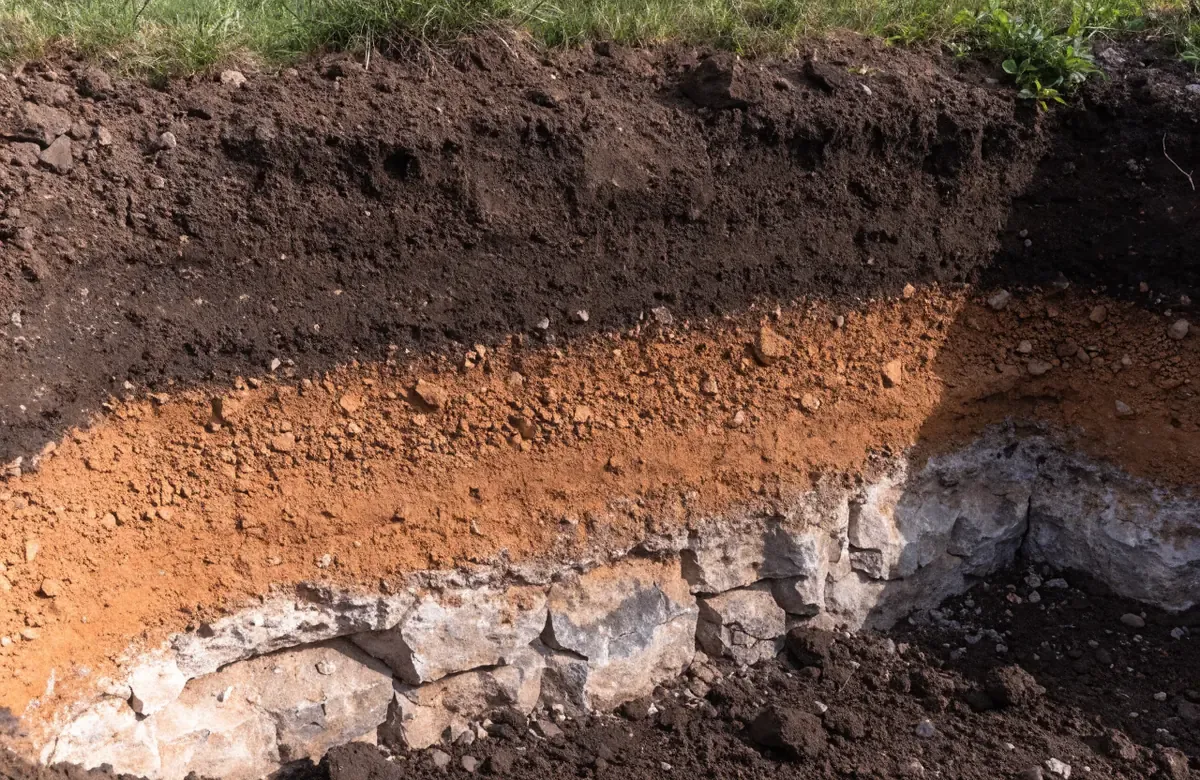
Missouri is not one kind of ground. North of the Missouri River is glacial till, where slow percolation tends to be the constraint. The Ozarks are karst: cherty clay over fractured limestone, shallow soil, and vertical separation doing the deciding. Western Missouri is unglaciated Osage Plains, dense and clay-rich, where slow percolation pushes lots onto engineered designs. The river bottoms are alluvium, where the water table is the question. Which one you are in shapes whether you get a conventional trench field, an engineered alternative, or in the slowest ground a lagoon.
Septic systems and lagoons in Missouri covers what each one needs.
Source: 19 CSR 20-3.060(5)(A)2., Missouri Code of State Regulations, read 2026-08-26.
Start where your question actually is
Need the job done, not just the rule explained
Your request goes straight to an independent local septic contractor serving your Missouri county, usually within about an hour during the day, not a national lead list.
Tell us the county and the jobLast reviewed 2026-08-26.